Posts

How much risk is too much? Uganda and Rwanda (with a happy ending)

10/14/22-10/30/22

“Cough, cough, oh no, I have Ebola diarrhea!”

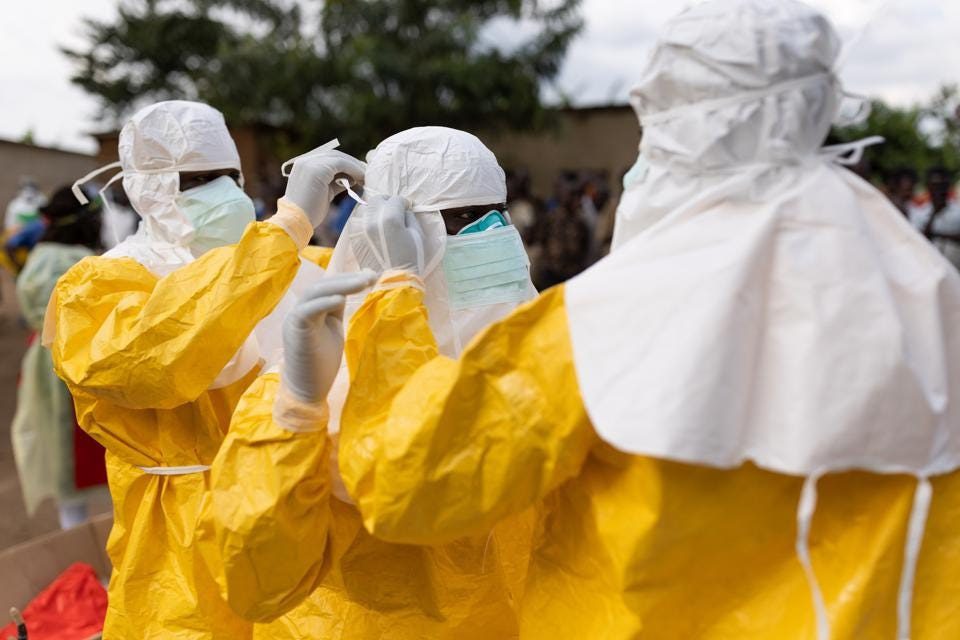
That was my unfortunate joke to the kids as we discussed what we might say to discourage other travelers from entering our closed cabin on the train from Poland to the Czech Republic. I probably shouldn’t ever joke about a deadly disease that kills roughly half of those infected–I was going for absurd, but sometimes my humor is a little off in that way. I few weeks later, I found myself clarifying to the kids that they should never, ever, joke about Ebola.

Risks and the US State Department

A few months ago (when I started this post!), if you went to travel.state.gov, you’d see this at the very top of the page:

Just in case you haven’t been following world news for the past 15 months. As an aside, we saw a lot of Russian tourists in Thailand. One of them concurred with our State Department advice: “Oh yeah, don’t go to Russia, it’s a mess there right now.”

Russia is maybe the most extreme example of what the US State Department classifies as “Level 4: Do Not Travel”. Others with that distinction include rather obviously North Korea, Syria, Libya, Iraq, Iran, Afghanistan, Yemen, Myanmar, Ukraine, and Belarus. (The remaining countries might be more or less obvious depending on how closely you follow the news: Sudan, South Sudan, Somalia, Haiti, Venezuela, Mali, Central African Republic, Somalia, and Burkina Faso.)

Generally, Karen and I are in complete agreement with the State Department about these Level 4 countries. For our aborted 2020 trip around the world, we were planning to visit Belarus, Ukraine, Russia, and Myanmar, but there weren’t wars to worry about in those places back then. (We were a week or two away from buying our very expensive Russian visas when COVID hit, so lucky timing on that!)

The next tier of warning, “Level 3: Reconsider Travel”, is a little murkier. It currently contains 31 countries. We’ve visited two (Egypt & Uganda), are planning to go to two others (Colombia & Peru), and went to another that was Level 3 at the time (Tunisia). We also considered and decided against going to three others–Ethiopia, Indonesia, & Madagascar. (The latter, like Tunisia, is back down to “Level 2: Exercise Increased Caution”.)

Assessing Risks

In most cases, these risks are more nuanced–for all the countries we’ve gone to or are planning to go to, they are some combination of high risks of crime or terrorism, but almost always specific to geographic regions of the country we could avoid: in Tunisia within 20 kilometers of the border with Algeria (we were about 30 away), in Peru and Columbia more remote parts that struggle with drug trafficking and terrorism.

In Uganda, there were warnings for regions we were planning to visit, but our mode of travel–driving our own car between resort hotels during the day–mitigated those risks substantially. Having always wanted to visit the “Pearl of Africa”, we felt confident enough to transfer several thousand dollars for our 4×4 rental and hotel stays to Road Trip Uganda for a non-refundable deposit.
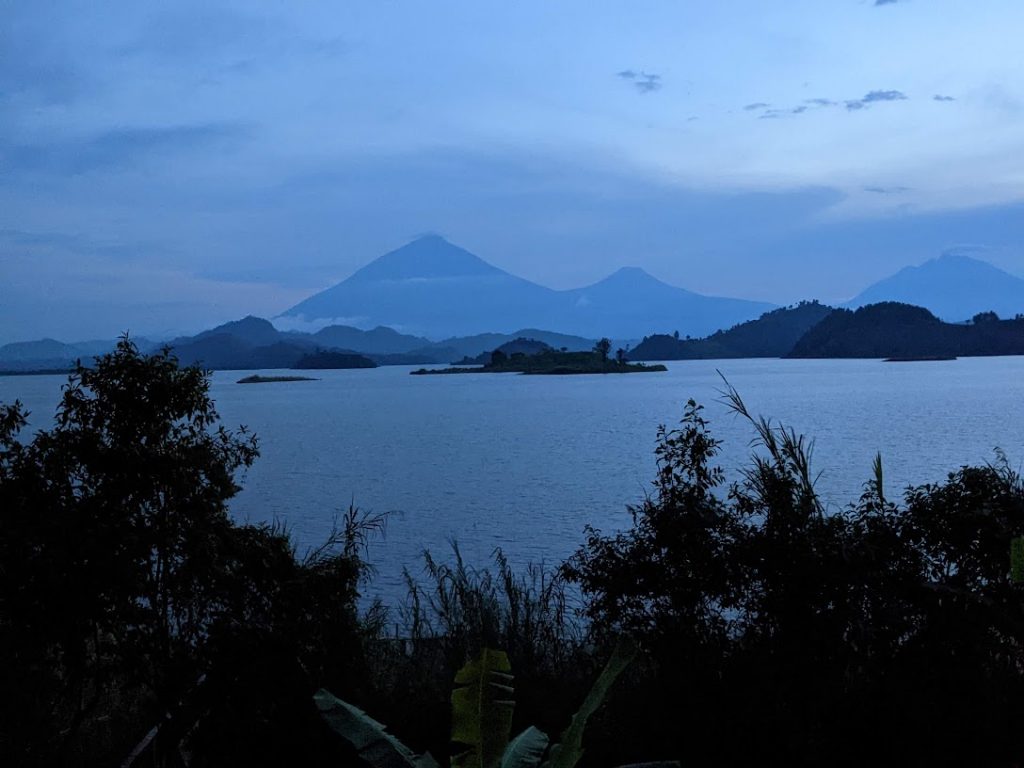
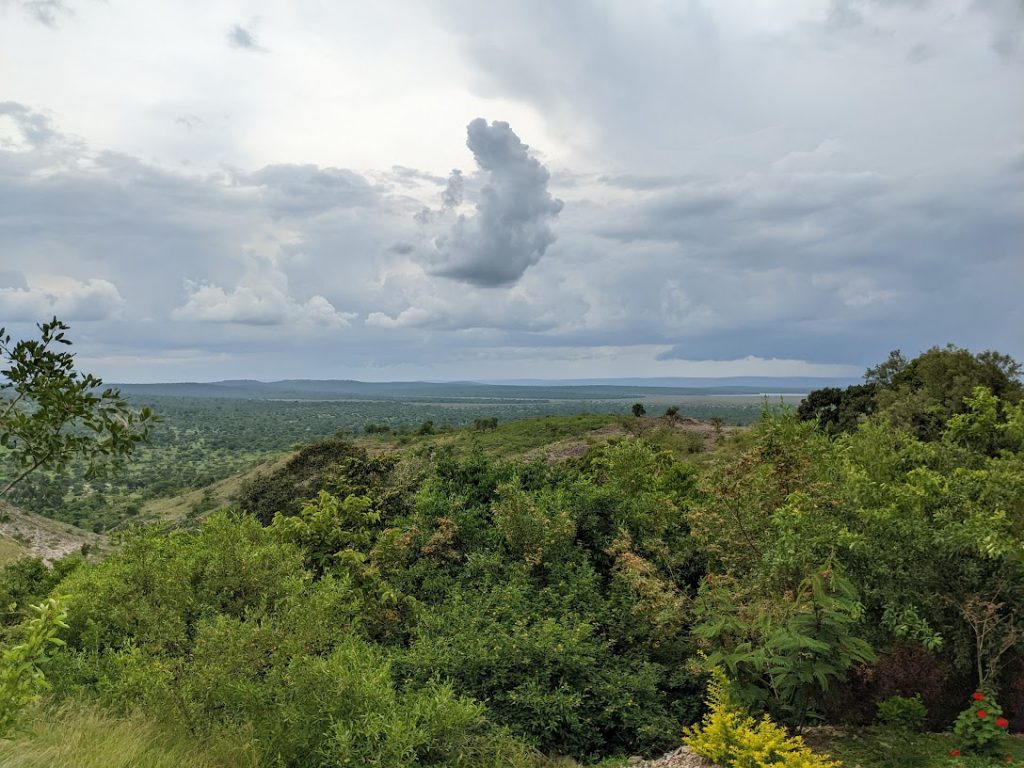
Lake Mutanda at twilight
Lake Mbara National Park

Ebola in Uganda

As bad luck would have it, about two weeks after I made that big deposit and only a few weeks before we planned to arrive, I got this news alert:

Uganda declares Ebola Virus Disease outbreak

If you’re like me, 2+ years of a COVID pandemic leaves you a little more nervous about other potential pandemics. Many other tourists cancelled their travel plans immediately, but (a) doing so would have cost us roughly our travel budget for an entire month, (b) Ebola doesn’t spread particularly easily, (c) the alert for Ebola specifically was only Level 2. We decided to risk it, and I made an even bigger final payment for what we’d planned to be the most expensive month of our trip. I did, however start checking Uganda Ebola news on twitter so frequently that my Google recommended articles became entirely about Uganda and the Ugandan government.

We felt pretty good about that approach until this story popped up a couple of days after we arrived:

Ebola in Uganda: Three-week lockdown announced for two districts

It was two districts we weren’t planning to travel to, except for driving straight through, and again the risk of contracting Ebola for tourists was very low. We mostly started worrying about airport lockdowns that could get us stuck without the ability to move on to another country. After seeing this news, we briefly considered how we might abandon the rental car in Rwanda (after we’d crossed that border) and fly onwards to Egypt without coming back to Uganda. It wasn’t practical, though, so we continued onwards.
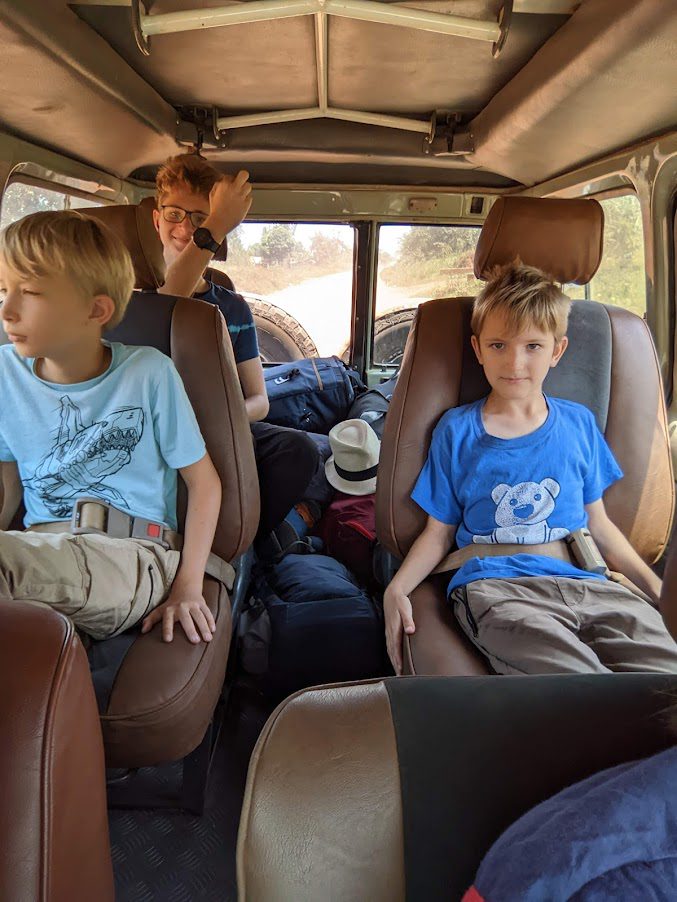
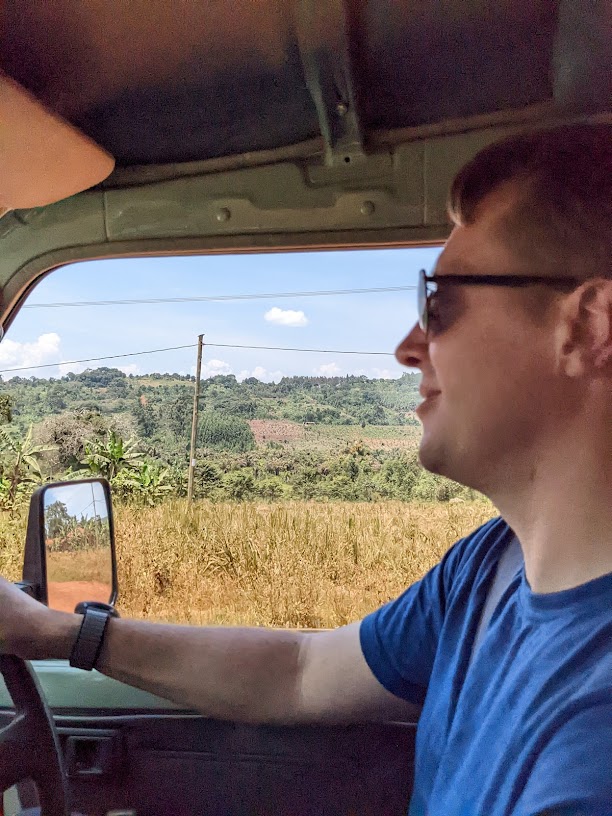
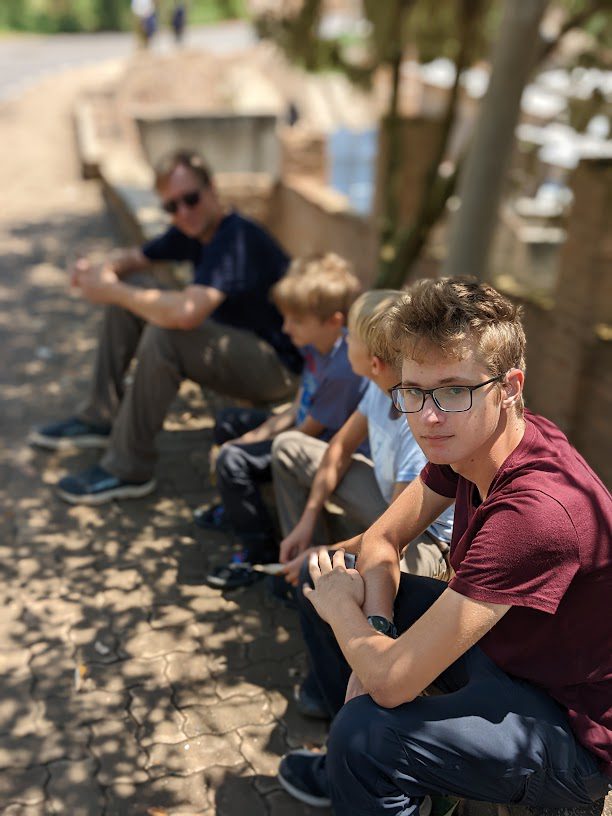
Henry is constantly judging us. Teenagers, right?

A Great Time in Uganda and Rwanda

Luckily, this story worked out just fine, both for us and the Ugandans. Here is a happy headline from early January:

Ebola Outbreak Over in Uganda

I’m also happy to report that Google has finally stopped giving me recommended articles about Uganda, now favoring endless posts about cell phones, although that’s probably the subject of a whole other post.

In the end, we had an OK time in Rwanda and a wonderful time in Uganda–certainly one of the top countries of our trip and a place I’d recommend to everyone. To recap, here are our Instagram posts from those days.

Country counter after Uganda and Rwanda:

  • 25th & 26th countries of our trip
  • Me: 65 countries (including 37 eating McDonald’s)
  • Karen: 65 countries
  • Henry: 39 countries
  • Charlie: 35 countries
  • James: 32 countries
Guest Post by James: Egypt

10/31/22-11/10/22

For something a little different, in the next few posts I’m going to share (with his permission) what 8-year-old James wrote in his private blog. My Instagram posts appear below James’ writing.


After weeks of safaris, fancy lodges, national parks, and gentle but wild animals, we needed a little bit of chaos! We flew from Entebbe, Uganda to Cairo, Egypt. Rather than dodging monkeys on the streets, we dodged motorcycles and street vendors. Our favorite street vendor in Cairo was a guy selling sushi on his bike! Rules of the road did not exist and our cab once drove across a sidewalk to make a U-turn, and walking across streets was almost impossible.

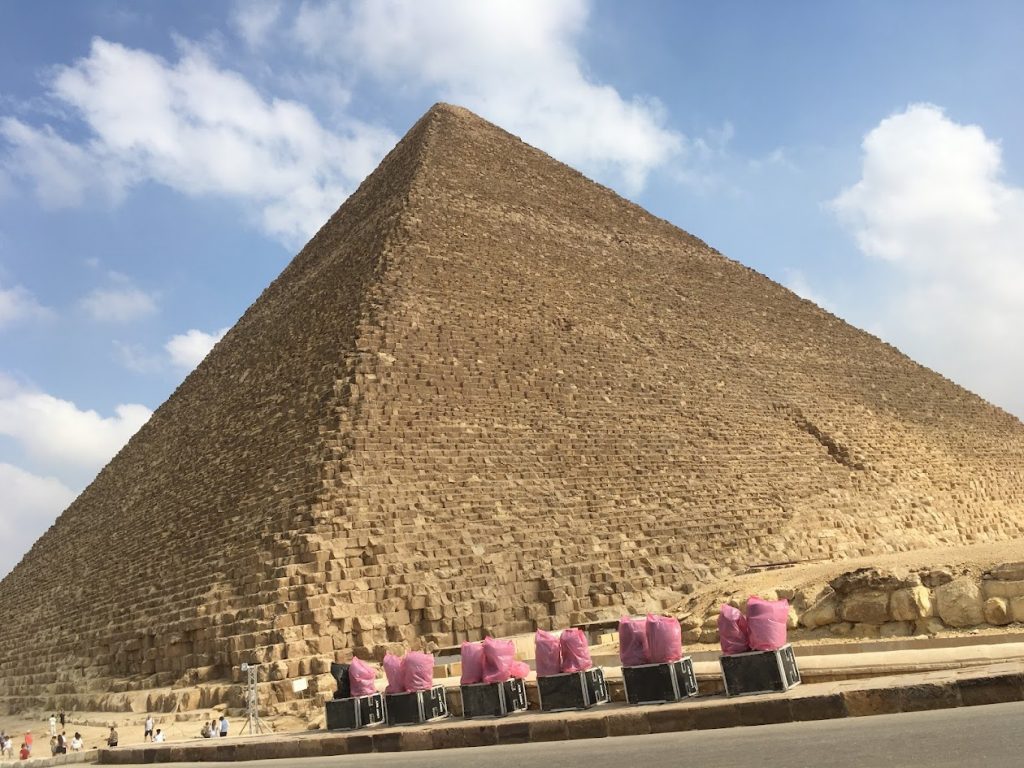
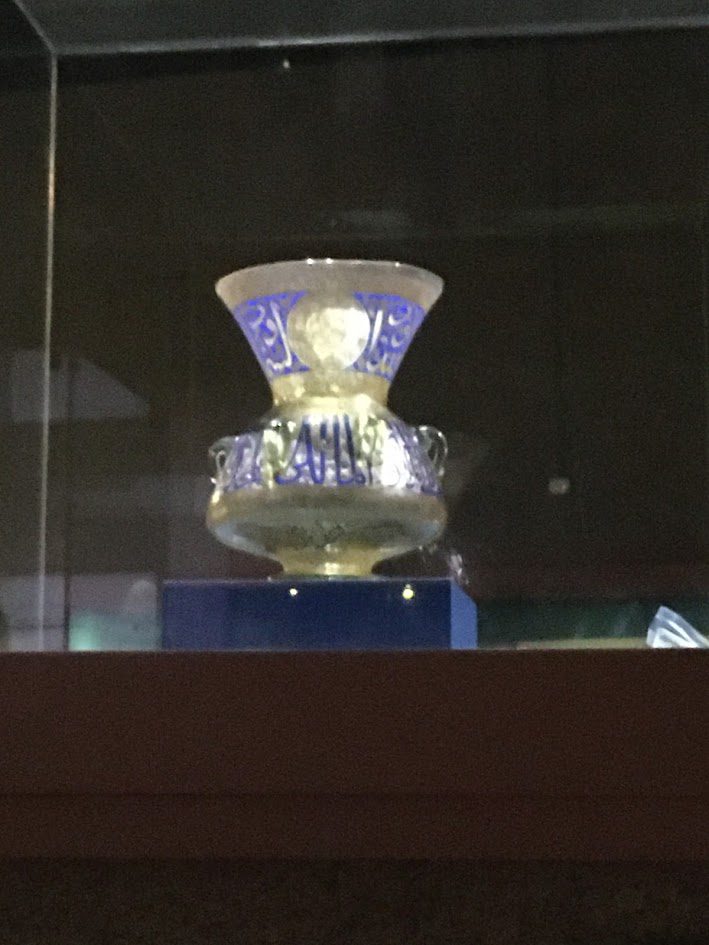
In Cairo, we stayed at a massive, amazing apartment, mostly because we all had our own rooms (mom edit: and a washing machine!) Besides the huge living room with a the huge TV (where we watched Gorillas in the Mist), I loved the second-floor deck that overlooked the (busy, busy) street. On our first day, Dad bought too many donuts and we ate them on the deck; we snacked on those donuts for days. Other than the pyramids at Giza (I wrote a post about that already), we went to the Egyptian Museum, where we saw King Tut’s golden burial mask and a bunch of mummies.

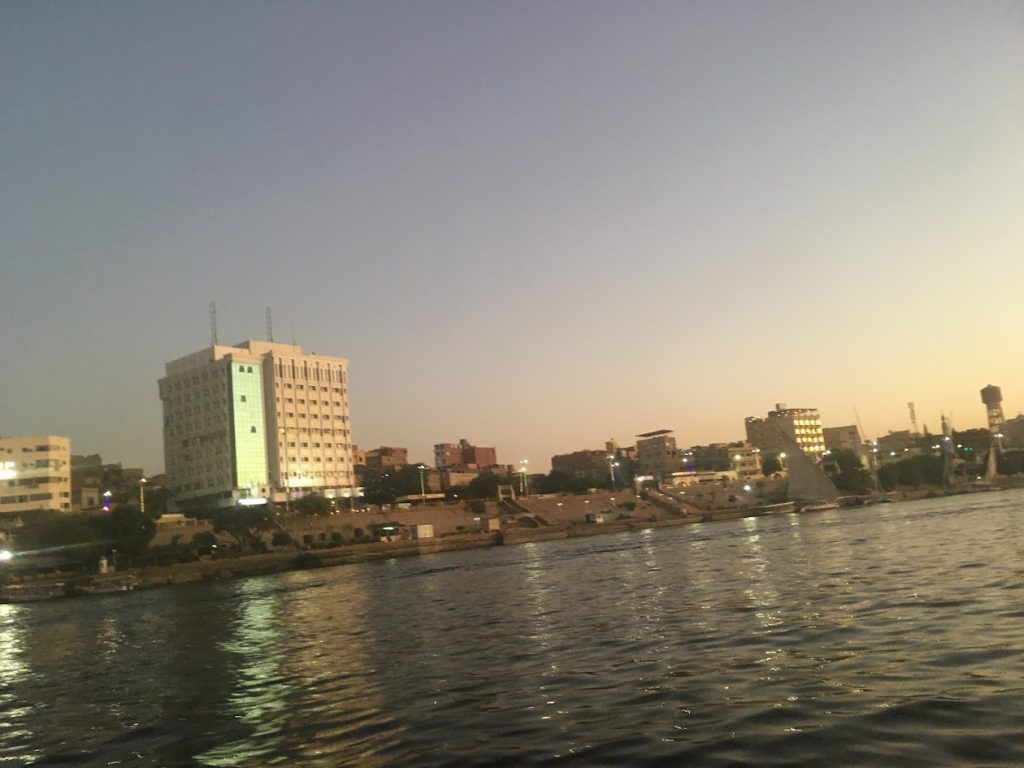
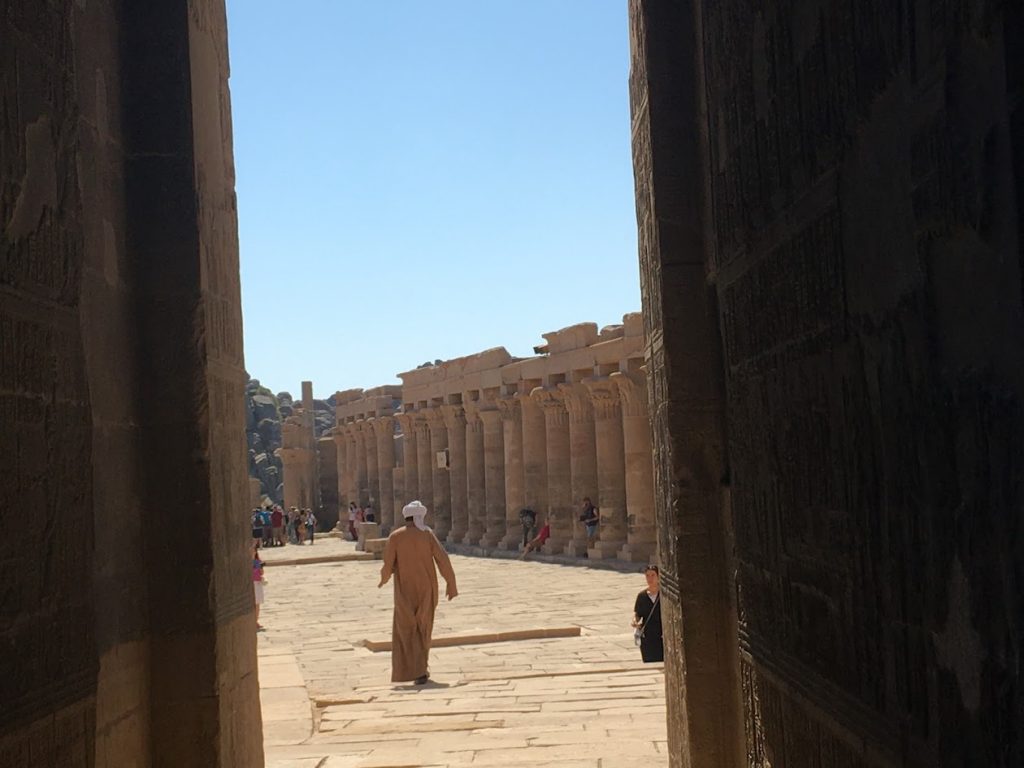
After a few days in Cairo, I took my first overnight train (1st class!) to Aswan, a lovely city on the Nile and home to many Egyptian archeological sites. On the train, I also discovered my love of spagetti-rice: rice cooked with bay leaves and vermicelli noodles. We arrived very early in the morning and walked 2 kilometers with our heavy backpacks and had to take a ferry across the Nile River to get to our hotel on Elephantine Island, which is a UNESCO World Heritage Site because of its Nubian villages. While I did homework, Mom and Dad walked to the museum and some ancient Egyptian ruins. We also took a ferry to see the ancient city of Philae, which is an island with a bunch of temples. We saw a square where people discussed politics in ancient Egyptian times.

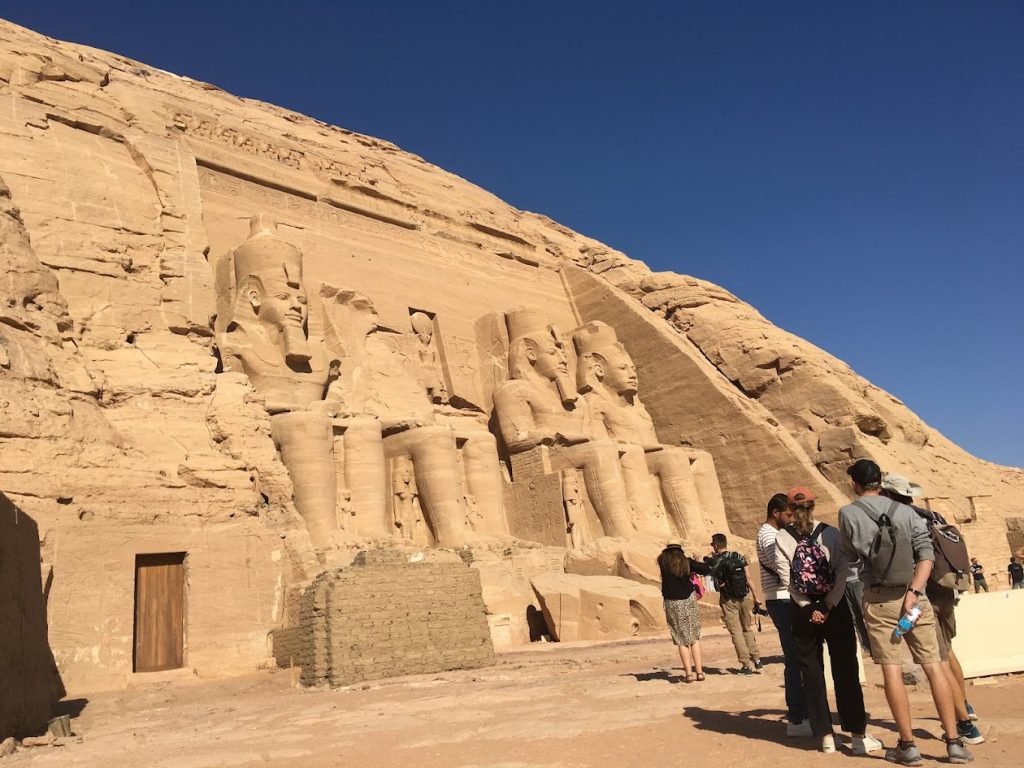
The main reason we visited Aswan was because it was the only way to see Abu Shimel, the Tomb of Ramses II. We had to leave at 4 am for a 3.5-4 hour drive to Abu Shimel. It is a complex made up of two temples and was HUGE. The Egyptians, in 1968, had to move the entire complex away from its original spot to the current location because of water rising in Lake Nasser. Lake Nasser is also the largest artificial lake the world. Because of the heat, we could stay for 2 hours and we had to drive 3.5-4 hours back to Aswan.

outside the temple

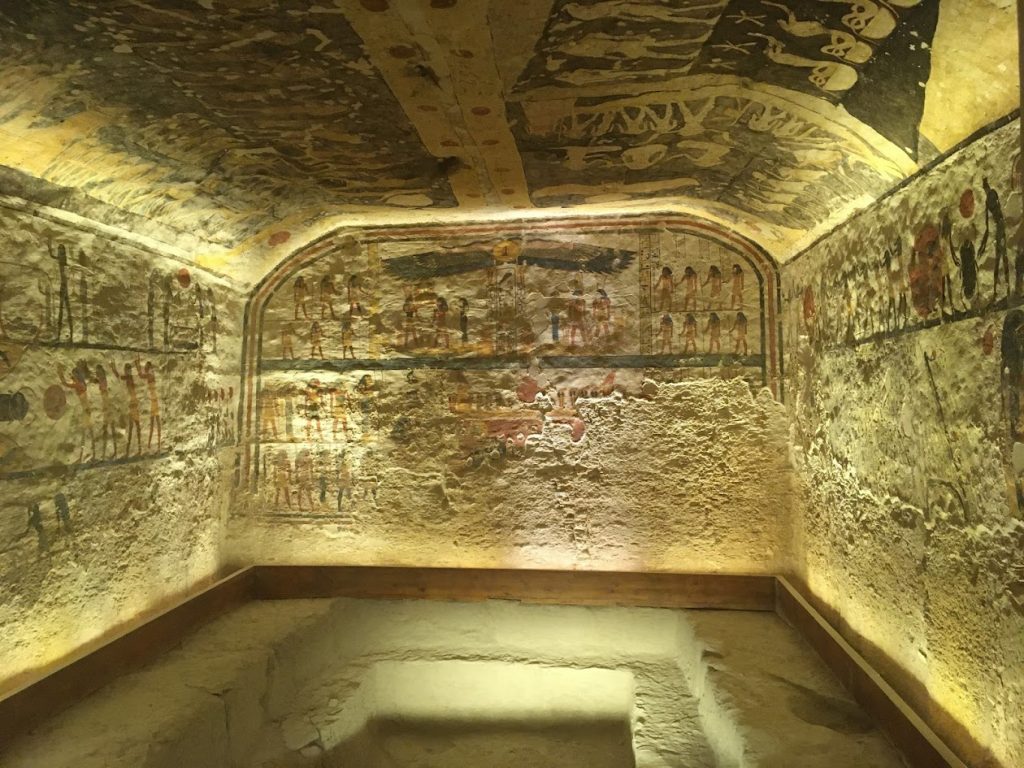
The next day, we took a 3-4 hour train to Luxor, Egypt and then another public ferry to our hotel on the other side of the Nile. We visited Valley of the Kings and saw three tombs, but it was also very hot. On our last day, we saw Luxor Temple, but it was at the end of our time in Egypt so we didn’t really care anymore.

After Luxor, we took a 10 hour train back to Cairo, but it was delayed for 5 hours so it was longer than we hoped.


He’s great, right? Karen helped some with the editing, but the content is all his. Here are my Instagram posts from Egypt along with a country counter at the end:

Country counter after Egypt:

  • 27th country of our trip
  • Me: 66 countries (including 38 eating McDonald’s)
  • Karen: 66 countries
  • Henry: 40 countries
  • Charlie: 36 countries
  • James: 33 countries

Guest Post by James: Israel

11/12/22-11/19/22

Here’s another sample of what 8-year-old James wrote in his private blog. My Instagram posts appear below James’ writing. (Besides the Instagram posts, picture credits are all to James as well.)


After our wonderful time in Egypt, we traveled to Tel Aviv, Israel. It was quite a change after two months of traveling in Africa (Tunisia, Egypt, Uganda, Rwanda, and Kenya). We could finally drink the tap water, flush toilet paper down the toilet, and didn’t have to brush our teeth with a cup of bottled water. Also, we could finally eat raw fruits and vegetables.

We flew from Cairo to Tel Aviv, arriving at 11 pm on Shabat. Because of the timing, our taxi cost $70 to get to our Airbnb in Jaffa! When we woke up on Saturday morning, we realized that there was no wifi, so Dad got 100 GB of data for $9 so we ended up with a lot of wifi. We took a super fancy Shabat (free!) bus to Tel Aviv and saw Wakanda Forever. The next day, we planned to see Tel Aviv but the weather was too nice so we walked to the beach. Charlie and I made a sand turtle covered in shells and we named her SHELL-BY. The best part of Tel Aviv was a delicious falafel place with excellent pita; we went three times!

After Tel Aviv, we took a very short train to Jerusalem, which became one of my favorite cities. Not only did I develop my love of pomegranates, I also really liked the Mahane Yehuda Market. On our first full day, we took an excellent walking tour through Jerusalem’s Old Town and Church of the Holy Sepulchre, which was built on the site where Jesus was crucified.

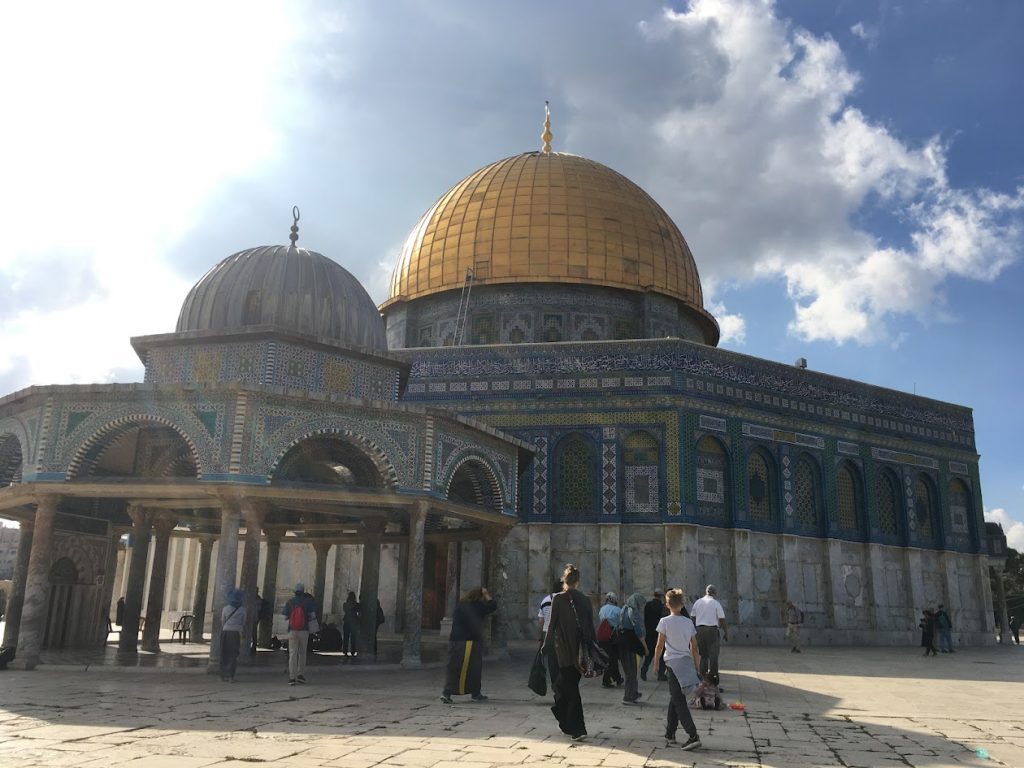
We learned about the various occupations of Jerusalem, Jesus’ crucifixion, and the different quarters of the city. When visiting the church, a lot of people kissed the stone where Jesus was crucified, but we didn’t. The next day, we walked the Via Dolorosa, which is the route Jesus took to his crucifixion. We saw the spots where he dropped the cross, he met his mother, and the other 12 stations (14 in all). We also saw the Dome of the Rock on Temple Mount, but I mostly remember the view of the Russian Orthodox Church.

Finally, we went to the Western Wall and said a prayer. On our way out of the Dome of the Rock, we got freshly squeezed pomegranate juice in the Muslim Market for $1; the vendor gave us a free pomegranate because my mom told him that we don’t have them where we live. We ate it for dinner that night. One of my favorite parts of Jerusalem was dinner every night – Mom, Dad, and Charlie went to the market near our Airbnb and got fresh pita, veggies, and hummus. We ate little picnics in our apartment for dinner, but I mostly loved the pomegranates because the seeds had little bursts of juice when I chewed them.

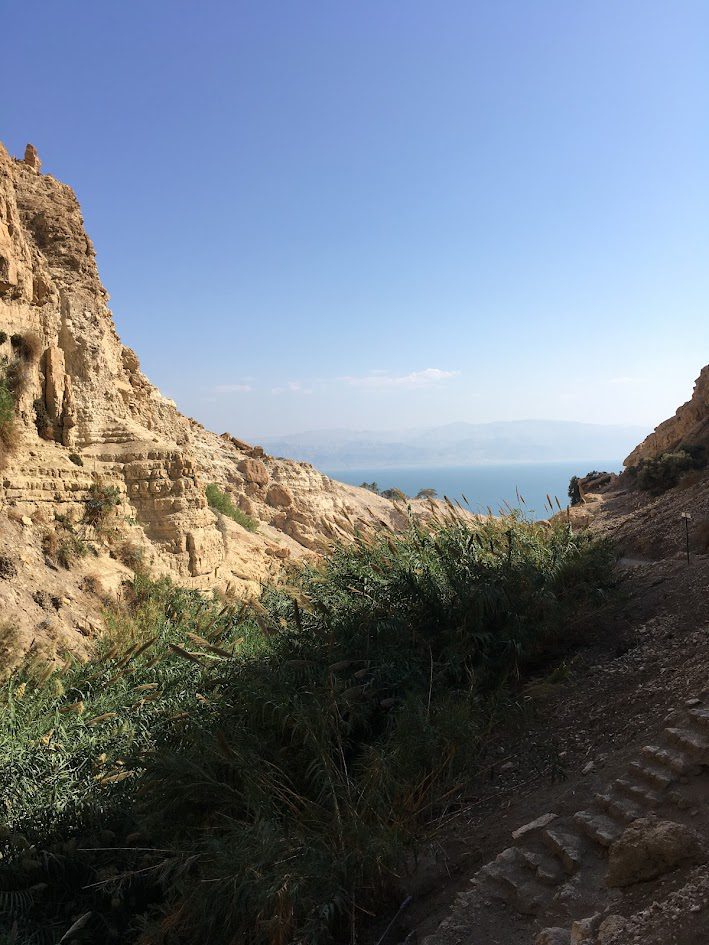
We visited Masada, a place near the Dead Sea. We rode a huge cable car to the top of the mountain to see the ancient ruins where Jews lived and hid from the Romans. It was really hot and I saw some graffiti, which made me angry. We also visited the Ein Gedi Reserve, but I don’t remember it very well but there was a waterfall.

After Ein Gedi, we went swimming in the Dead Sea, which is like pure salt. The bottom of the Dead Sea was salt instead of sand! I floated and reached a point where I couldn’t even sit down on the bottom of sea! I had a small cut on my thumb and it hurt when I put it in the sea.

We stayed in two other super cool places in Israel! The first was a Bedouin community in the desert. We slept in a huge tent, where we also had communal meals with the Bedouin family and another four Polish visitors. The meal was chicken and rice and it was delicious! Charlie drank 6 glasses of tea, but I didn’t really like it, but I loved the biscuits. The second super cool place we stayed was Kibbutz Lotan. We arrived in time for Shabat dinner, which was an also delicious buffet of chicken, pasta, bread, and juices. We sat with two teenage Kibbutz volunteers, serving for a year. (I would not like to volunteer there because I would have to wake up at 5 am every single morning and that is not very pleasant.) On our first morning, we had a ton of trouble finding the breakfast area, but it was another delicious buffet once we did. We took a tour of the kibbutz and learned about their jobs, kibbutz living and culture, and their commitment to sustainability. They make their own houses out of mud and hay! It was actually a pretty comfortable house! I think that they made their furniture out of wood and grow their own food. There was a tree called the Magic Tree and the leaves were super healthy and tasted like a spiced leaf. (It was disgusting).

After Kibbutz Lotan, we drove to the border of Jordan, returned the car, and walked over the border. I wrote a post of Jordan already.


Here are my Instagram posts from Israel along with a country counter at the end:

Country counter after Israel:

  • 28th country of our trip
  • Me: 67 countries (including 39 eating McDonald’s)
  • Karen: 67 countries
  • Henry: 41 countries
  • Charlie: 37 countries
  • James: 34 countries

Nosebleeds y nadie no habla en La Paz

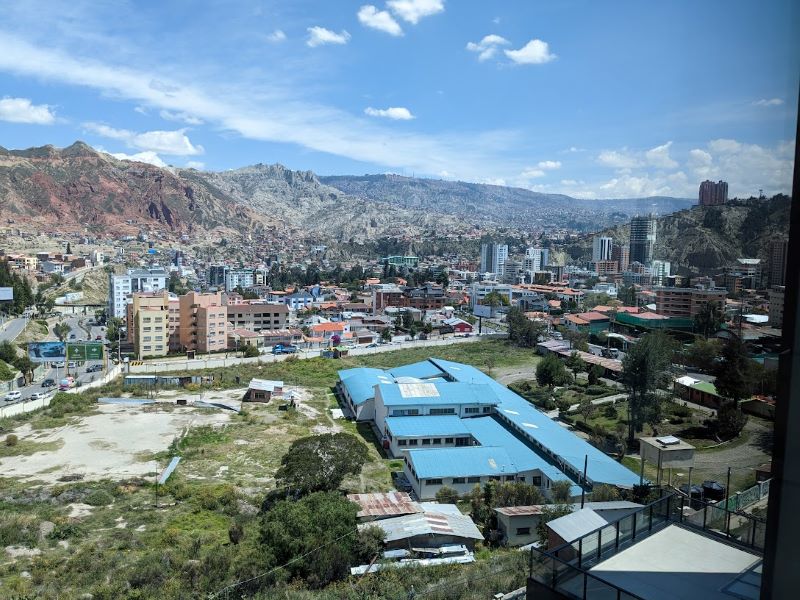
Greetings from two miles above sea level in La Paz, Bolivia!

We landed here a couple of days ago and have collectively only suffered 6 nosebleeds from the altitude, which is thankfully a half mile lower than the airport. (“El Alto” is the highest airport in the world!) When we first arrived, walking up a very slight slope was a challenge and most of us had headaches. We’re beginning to adapt, though, and I hope to make an easy jog around town tomorrow morning.

No complaints, though: La Paz is one of the most beautiful cities in the world, with skyscrapers nestled in a valley of mountains across the perimeter of the city. That beauty is one of several reasons why, at 12 days and 11 nights, this will be the longest stop of the trip.

The second reason is that I have great friends: Kim and Brian, who live in the Bay Area, own an apartment here they use when visiting Brian’s family and they were kind enough to offer it up for our use while here. After more than a few nights shared in a single “family” hostel room, we’ve all been overjoyed to spread out in this three-bedroom, three-bath refuge. The view of the city at the top of this post is from our master bedroom. Thanks Kim and Brian! (Kim was also instrumental in helping me secure my Bolivian visa by crafting a very nice letter in Spanish that helped the border guards believe I should be allowed into the country.)

Stopping for Studies

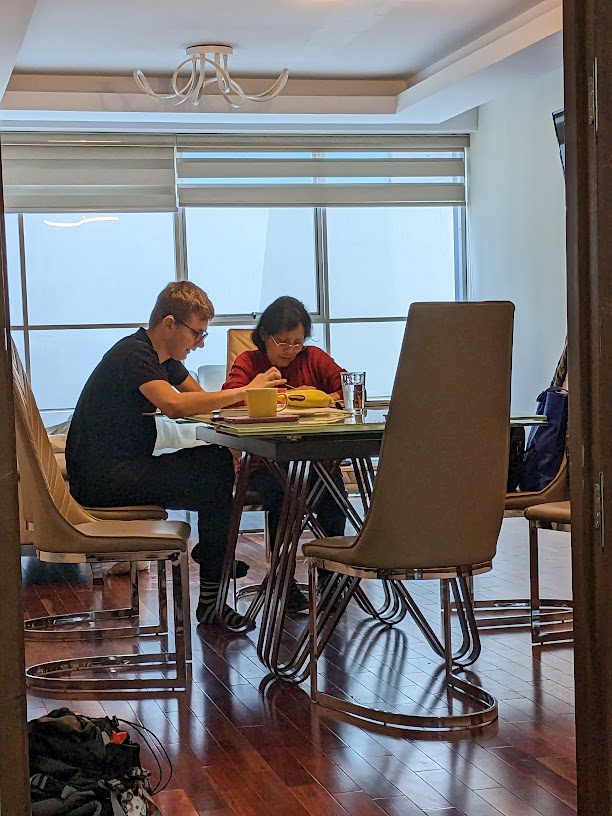
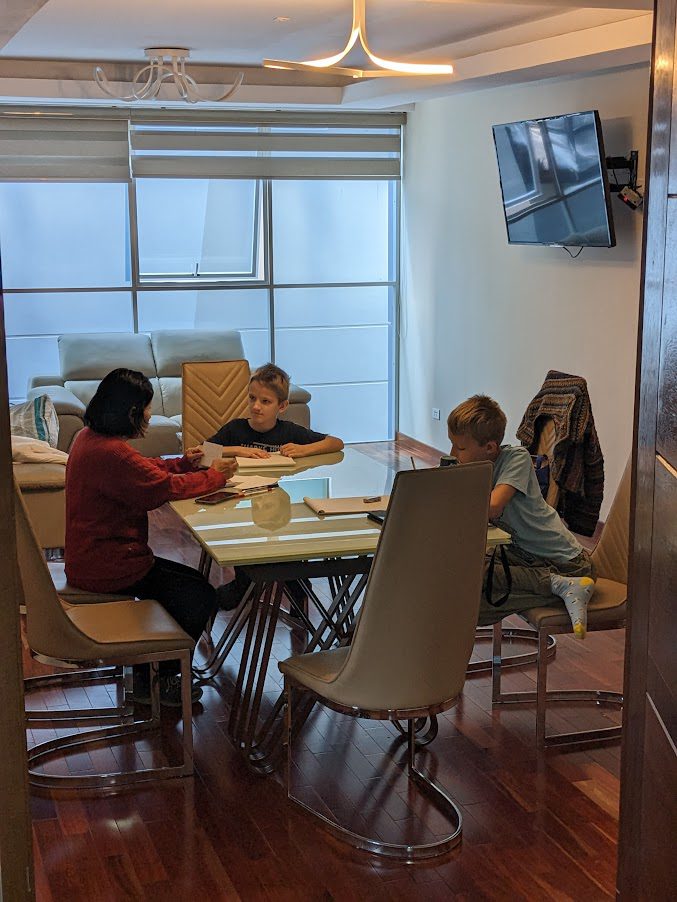
The final reason we’re staying so long in La Paz is that the boys need to do more schoolwork. They’ve been dutifully working through online lessons whenever we ask them to, but have frequently been foiled by slow Wi-Fi in many of the places we’ve tried to pause. Not a problem here! (I’m assuming the fact that Brian is a fellow electrical engineer has something to do with this.)

Each of them has been spending about three hours a day on online schoolwork, but that actually isn’t the main learning we’re prioritizing here. The “nadie no habla” in the title above means “no one does not speak” and is in reference to the fact that all three boys are studying Spanish here.

Henry is trying to replace the 3rd-year Spanish class he would have taken as a high school student, so is doing three hours per day one-on-one with Mery, the fantastic “maestra” I found here after a little bit of Googling and WhatsApping. James and Charlie had very little existing Spanish knowledge, so are doing two hours a day together, which Mery makes a lot of fun with explorations of household items and games like the one today where they had to run, jump, walk, or sit depending on what she said in Spanish.

Me speaking Spanish

I had the idea for in-person one-on-one instruction because it’s something I did when I visited Ecuador in 2002. You might think that the 3o hours of instruction Henry is getting over these two weeks wouldn’t compare to a year in the classroom, but I found that a similar amount of time was easily better than my year of community college Spanish lessons before my pre-business school trip to South America. I’m proud of the work the boys are putting in because “intensive” instruction really is intense, and they’re definitely earning their relaxation time at the end of every day. (I’m also proud of how independent they’re becoming from this whole “travel around the world” thing, but that probably deserves a whole new post.)

As I claim above, my Spanish skills were pretty good after those couple of weeks in Quito, but after over 20 years of almost no use, I’m frustratingly rusty. Pretty much no one speaks English anywhere we’ve been since we landed in Chile three weeks ago, so as the sole Spanish speaker in the family I’ve been gradually climbing back in the saddle. Reading is the easiest because context frequently lets me remember words I used to know, and I can ask for most things, sometimes with a quick Google Translate check to make sure I know the word. Understanding responses is the hardest, though, especially because pronounciations are “unusual” in Chile and Argentina. I’ve found it easier to understand people here in Bolivia, but that’s probably partially because I’ve been working on it for a few weeks.

Karen’s and my work

In addition to helping the boys with school–me mostly with Math, and Karen very patiently with James and his blog–we’ve also been taking advantage of the respite from constant motion and travel planning. Karen is going to spend some time on grad school plans while still pursuing her goal of reading 100 books this year. (My super cool wife is currently at 30 for the year! And she looks beautiful in her new reading glasses!)

I’m planning to spend more time thinking about and researching the kinds of work I’d like to do after we’re back home this summer. If you’re reading this and you have any great ideas or leads for me, please reach out and let me know! We’re on US East Coast time right now, so phone calls are pretty easy too.

Finally, I’m hoping to send out another blog post or two in the next couple of weeks after finding it very hard to squeeze into travel life. (That’s still a hope, so the best way to follow along with our current travels continues to be Instagram/Facebook, which you can see linked to this page.)

Happy Easter, or Semana Santa as they say here! Also, Chag Sameach! And Ramadan Mubarak! It’s a special time of year for many people around the world and my family is happy to be enjoying it from here in La Paz. Wherever you’re reading this espero que estés bien y disfrutando de la vida.

P.S. I cover that 2002 trip in my book, an excerpt of which you can find here.

Making like Phileas Fogg

Hello from New Zealand!

We won’t be here for long because in an hour or so, we’re boarding our flight from Auckland to Santiago, Chile. We’ve now been traveling 200 days longer than the 80 of the Jules Verne protagonist I mention in my title, but like him we’re about to experience the magic of the international dateline.

The kids are in fact very excited about the fact that, even though we’ll be on the plane almost 11 hours, we will land about 5 hours earlier than we depart, making March 15th the looooongest day of our trip.

As for our South American plans, after the better part of a week in Santiago, we’re planning to fly to Buenos Aires. We’ll probably head over to Uruguay for a day trip before flying a few days later to Cordoba and then traveling onwards from there to the Bolivian border and going to Santa Cruz. From Santa Cruz, we’ll go to La Paz, where we’ll stop for a couple of weeks for the kids to learn some Spanish. Then, we’ll head to Peru for about 10 days, before continuing on to Ecuador and Colombia. Our plan is to head from there back to the states during the last week of May.

After adding Australia and New Zealand to my last post from Japan, here’s our current count:

  • 45 countries so far, total
  • Me: 73 countries (including 44 eating McDonald’s)
  • Karen: 75 countries
  • Henry: 58 countries
  • Charlie: 54 countries
  • James: 51 countries

P.S. Charlie is going to pull to within one of Henry in the next few countries! Henry visited Chile, Argentina, and Uruguay as a one-year-old only child. Charlie will have to make his way to China if he wants to fully match Henry, though, since we took him there a few months before Argentina.

We’re Big in Japan

Konnichiwa!

I’ve skipped a lot of countries since my last post about Kenya (posted from Nepal), but I thought it would be nice to make a quick one here from Tokyo since Japan will be our last country in Asia. What follows is mostly logistics, but I still plan to add some more narrative posts (including rollups of my Instagram posts) of the countries we’ve already left.

We arrived here a week ago, and after visiting Sapporo and Tokyo are heading tomorrow to Takayama. From there, we’ll continue onward to Hiroshima and Kyoto before catching a flight to Cairns, Australia in another 8 days or so. Then, we’ll have a week split between there and Melbourne before continuing onwards for two weeks in New Zealand.

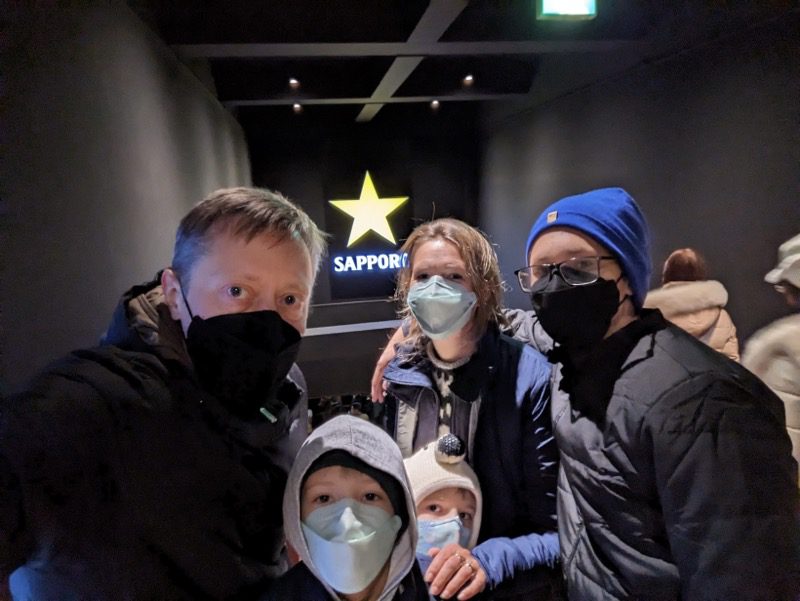
Iconic backdrop, but the Sapporo Beer Museum was nothing to write home about. We sped through in order to grab some lunch.

After New Zealand, we fly to Chile, and will travel in South America until we fly back to the US, probably in late May.

That’s looking forward. Here are all of the countries I’ve skipped since that last post about Kenya:

  • Uganda
  • Rwanda
  • Egypt
  • Israel
  • Jordan
  • UAE
    • India
    • Sri Lanka
    • Nepal
    • Thailand
    • Laos
    • Vietnam
    • Cambodia
    • Singapore
    • Malaysia
    • Brunei
    • Philippines
    • Taiwan

With that, our country count is as follows:

  • 43 countries so far, total
  • Me: 73 countries (including 44 eating McDonald’s)
  • Karen: 75 countries
  • Henry: 56 countries
  • Charlie: 52 countries
  • James: 49 countries

P.S. I was thinking of this song when I wrote that title, but maybe you prefer this other one.

Can you do a Kenyan safari on a budget?

10/5-10/13

Planning the African leg of our trip

We started this trip with a rough plan of spending about 3 months total in Africa and the Middle East after about 3 months in Europe. As I shared before, we ended up with closer to 4 months in Europe, but were still interested in spending more time in Africa if we could figure it out.

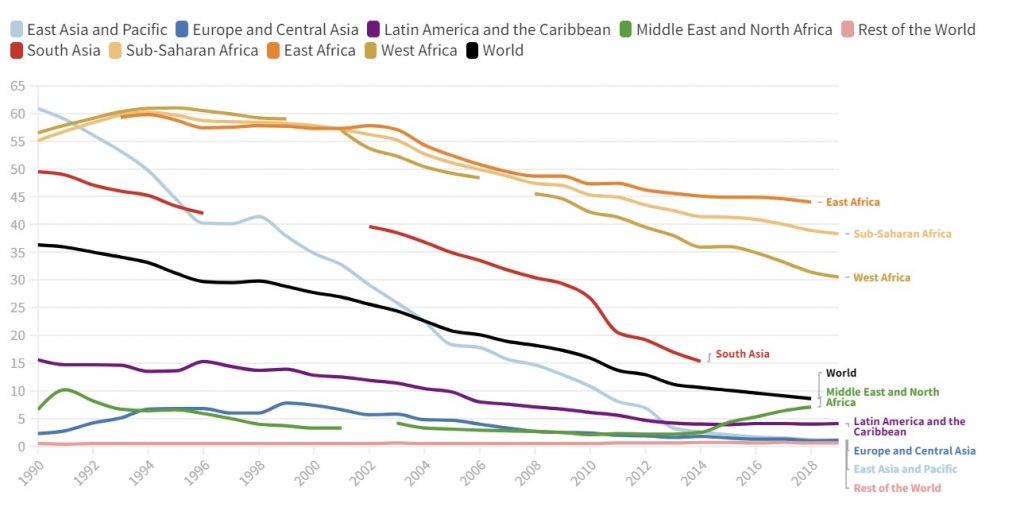
Surprisingly to a lot of people, Africa is the most expensive part of the world we’re visiting. It’s counterintuitive because of the concentration of poverty in Africa compared to the rest of the world: almost 2/3 of all of the people in the world living in extreme poverty (less than $1.90/day) live in Sub-Saharan Africa. That’s 39% of the population compared to less than 9% within the world as a whole. Here’s a graph from the World Bank showing how this has changed over the last 30 years:

Regional trends of extreme poverty ($1.90/day or less), measured in millions of people per region from 1990-2019. I’m focusing on Africa here, but I’ve always been inspired by how much the East Asia and South Asia lines have dropped, driven by the phenomenal growth China has experienced since the 1980s and India since the 1990s.

What that means for travelers is it’s harder for us to find food and services up to our standard of expectations, and we have to pay more to do so. If Karen and I were by ourselves, we’d be willing to take a few more risks, but we tend to play it a little safer since we’re thinking about our kids as well. (We want them to like traveling internationally.)

In other words, it’s cheaper to go to France than Kenya, where there aren’t anywhere near as many international tourists and budget hotels and tours catering to them. Instead, the market is more heavily focused on wealthier people looking to do “once in a lifetime” safari trips, who are willing to pay several hundred dollars a night (or more!) for the opportunity.

Pre-kids, Karen and I spent about half a year living in South Africa and were happy to rent a car and drive around there and in neighboring countries, but Kenya and the rest of East Africa seemed more challenging from the bit we’d started to read from guidebooks. We have a budget we’re trying to follow, though, so I started piecing together an itinerary one location at a time, starting with a budget lodge near Maasai Mara, the most famous reserve in Kenya, and hoping we could figure out the logistics and next steps as we went.

Luckily, the lodge I picked (because it was only $100/night for a family room!) was tied to a great tour operator as well. When I emailed to ask only about game drives locally, the helpful woman on the other side of the “info” email address offered up a couple of tour packages for touring Kenya that were only about 50% higher than our normal daily budget. We were lucky to have found Kairi Tours & Safaris in this way, because we had a great time! (I should also point out that Elizabeth, the woman answering that email, was incredibly helpful and patient–our Gmail thread for planning the trip eventually hit 48 total messages!)

Recovering in Nairobi

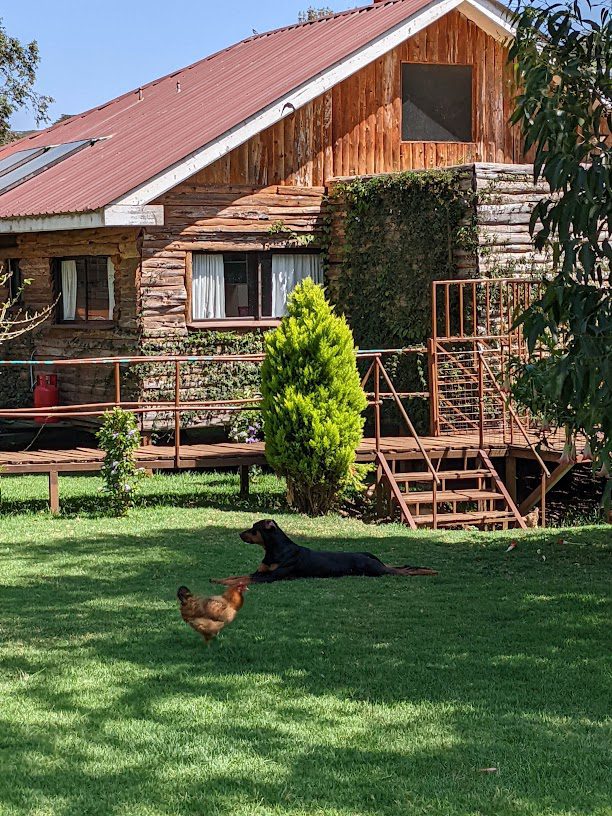
So, a couple of months after planning this trip, we finally came to Kenya. After a long couple of days of travel (an overnight ferry from Crete to Athens and a stopover in Istanbul), culminating in a 3:30am arrival in Nairobi, we planned a couple of rest days before starting our real trip. We were lucky to find this Airbnb farmhouse cabin in a fancy suburb of Nairobi:

You can see a dog and chicken here, but here’s my Instagram post with a little more of the local “wildlife”

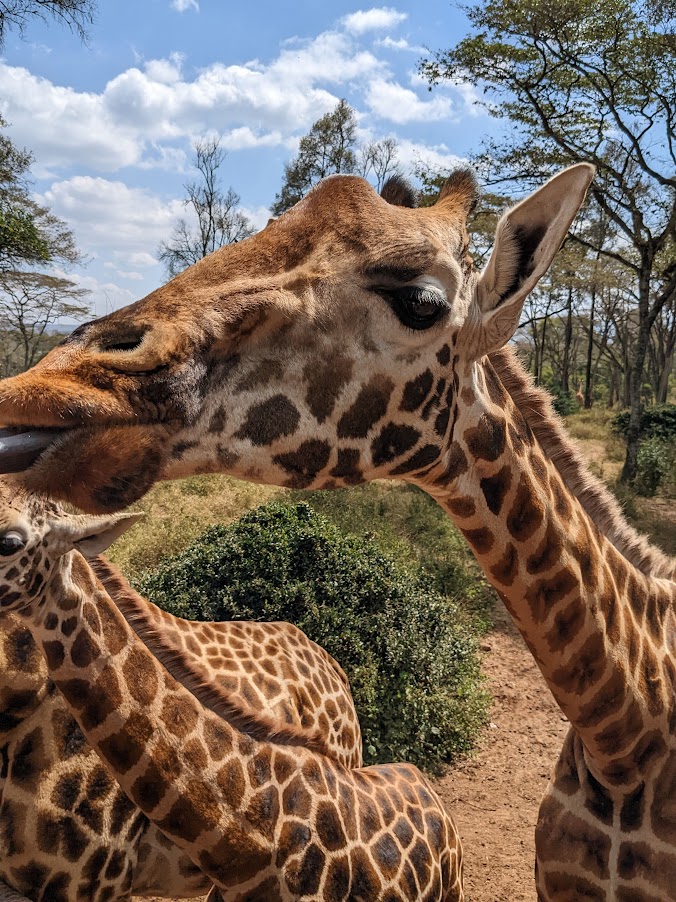
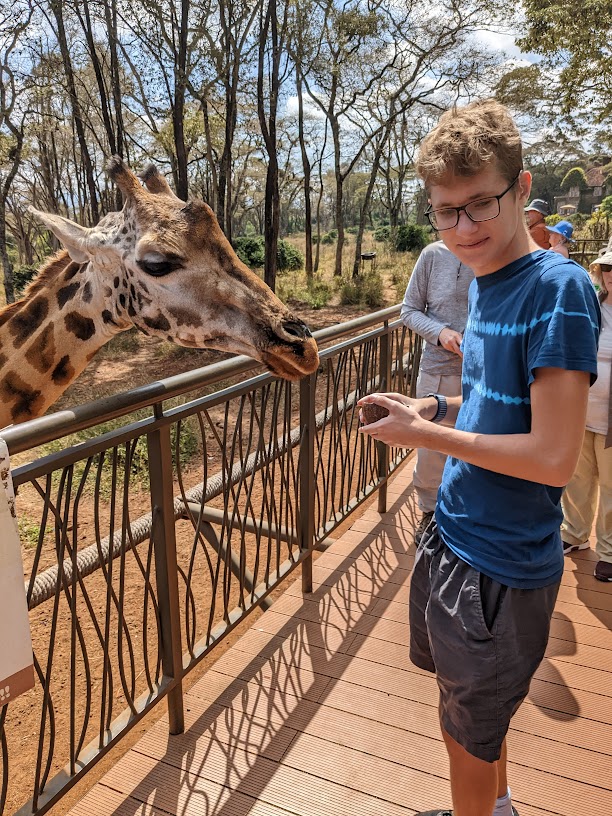
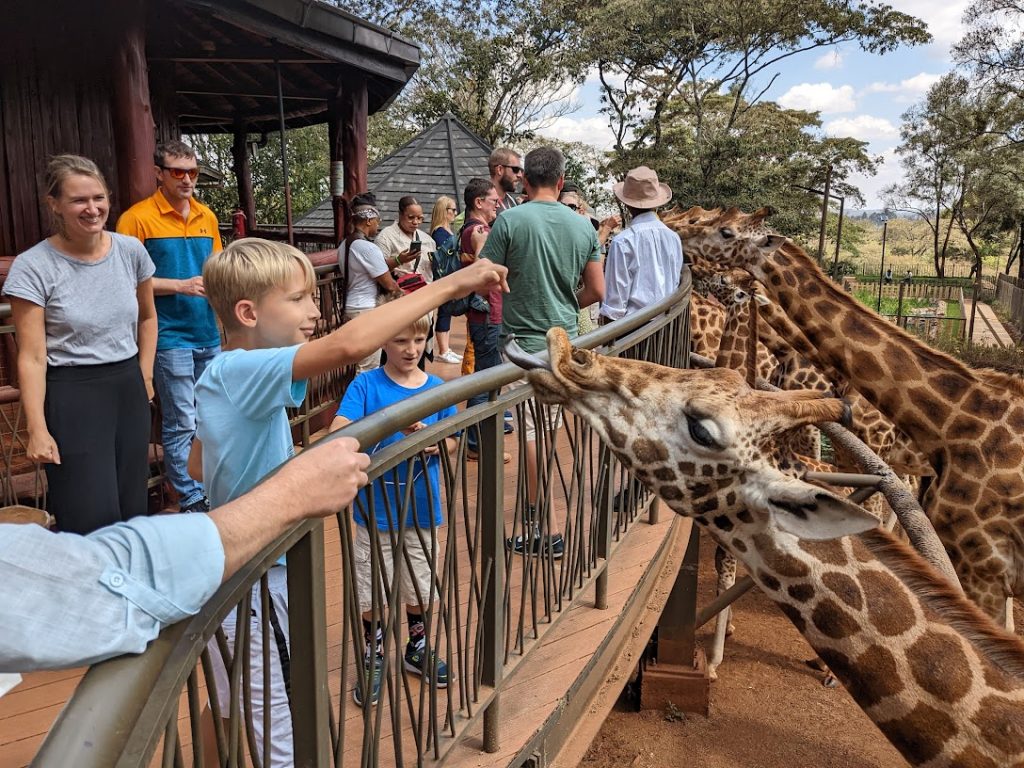
Our second day also included a visit to the awesome Giraffe Centre, which was small, but provided this up close and personal experience of giraffe tongues, which are pretty dry:

Travel to Maasai Mara

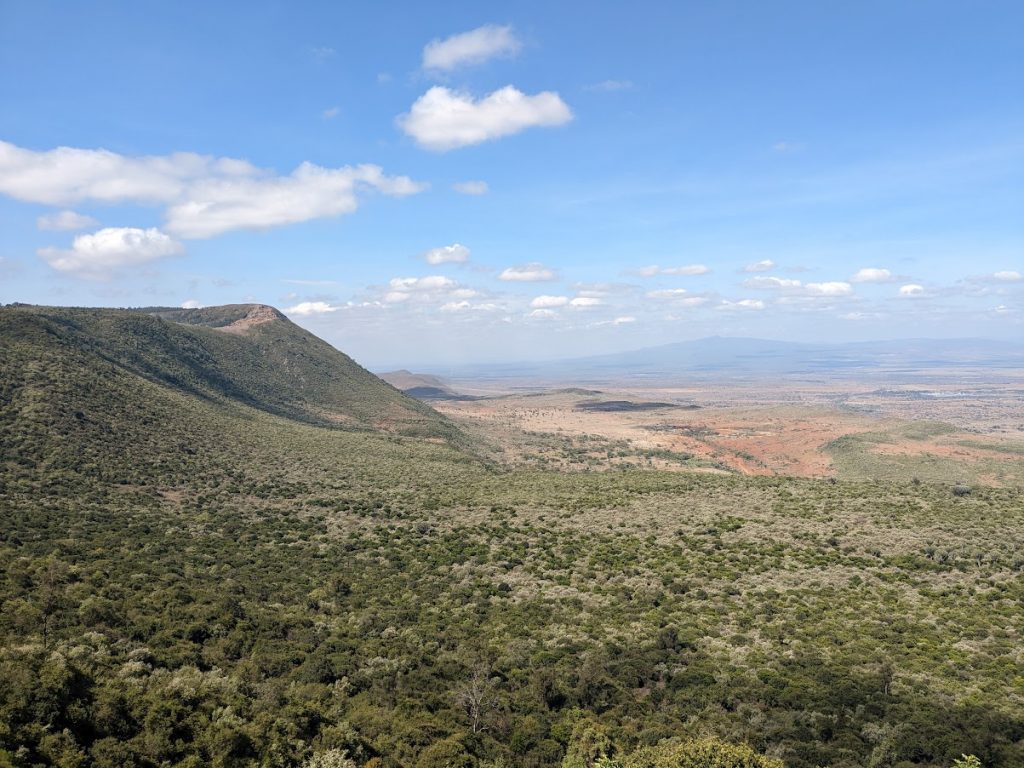
Our view of the Rift Valley, about an hour outside of Nairobi

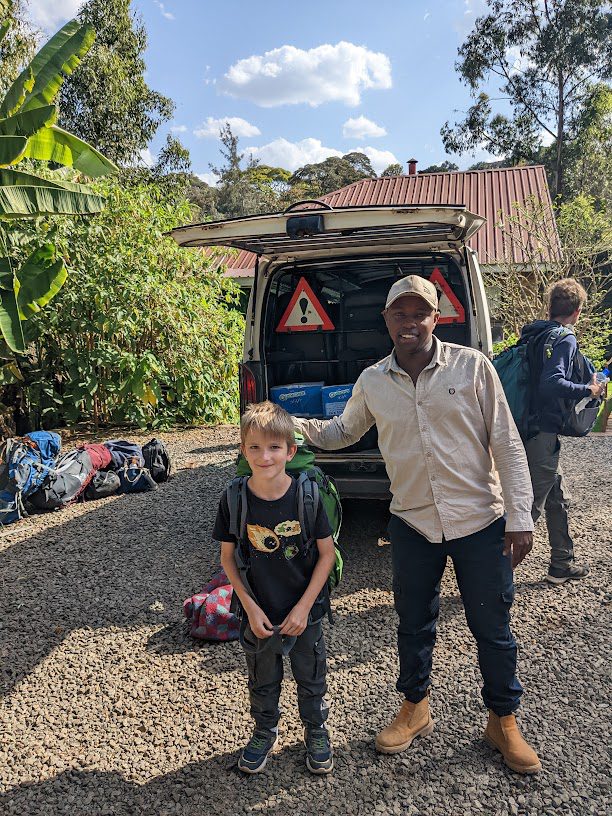
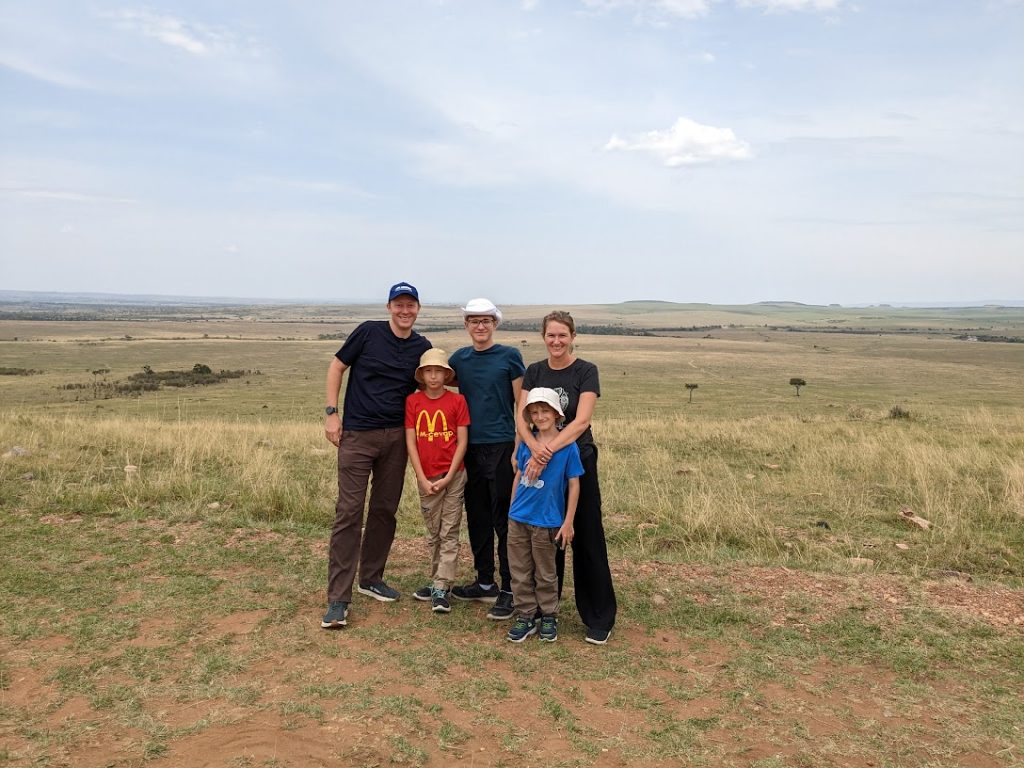
After our time in Nairobi, we met our driver/guide, James (pictured at the top of the post with our James), who picked us up in the morning and expertly navigated us through traffic and then some very bumpy roads to our lodge on the outskirts of the reserve. We then went for a short sunset drive of the camp, where we took in the great views, spotted impala, buffalo, gazelle, and guinea fowl for the first time, and got excited for our full-day drive the next day. (We also spotted a python, but my family hates snakes and tries not to talk about that!)

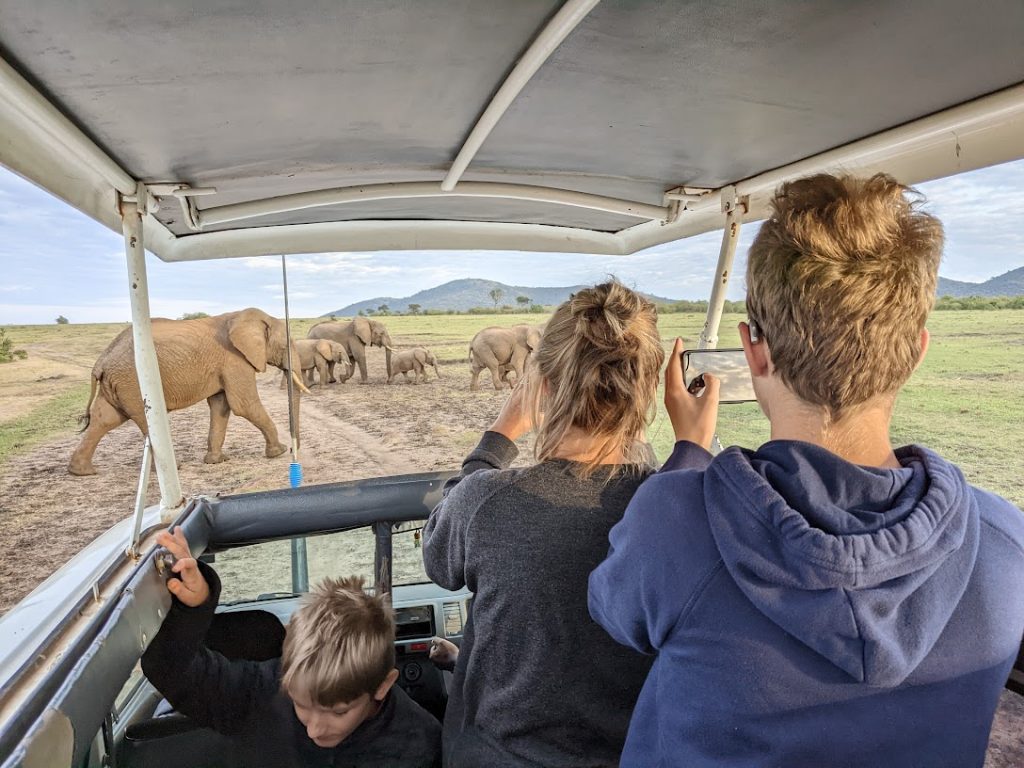
Here’s my Instagram post about everything we saw that next day. James did a great job talking to other drivers and peering through binoculars to find as many great animal sightings as possible. It was excellent!

Behind the scenes
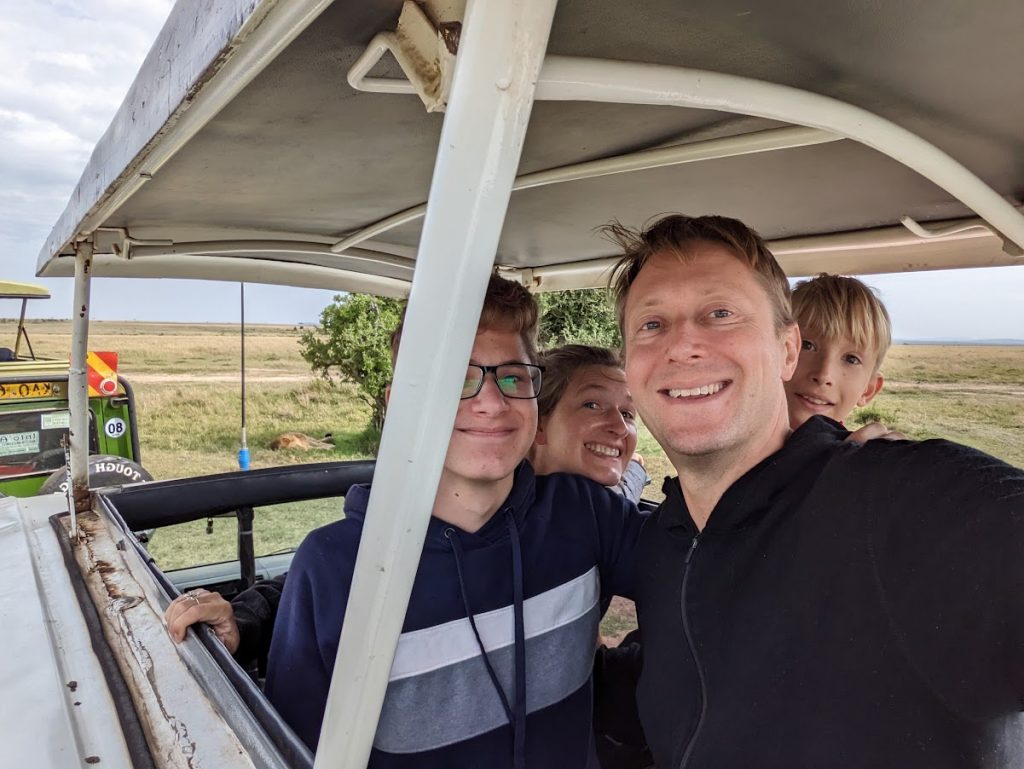
Sleeping lion selfie
That’s Tanzania in the distance

Crescent Island/Lake Naivasha and Lake Nakuru

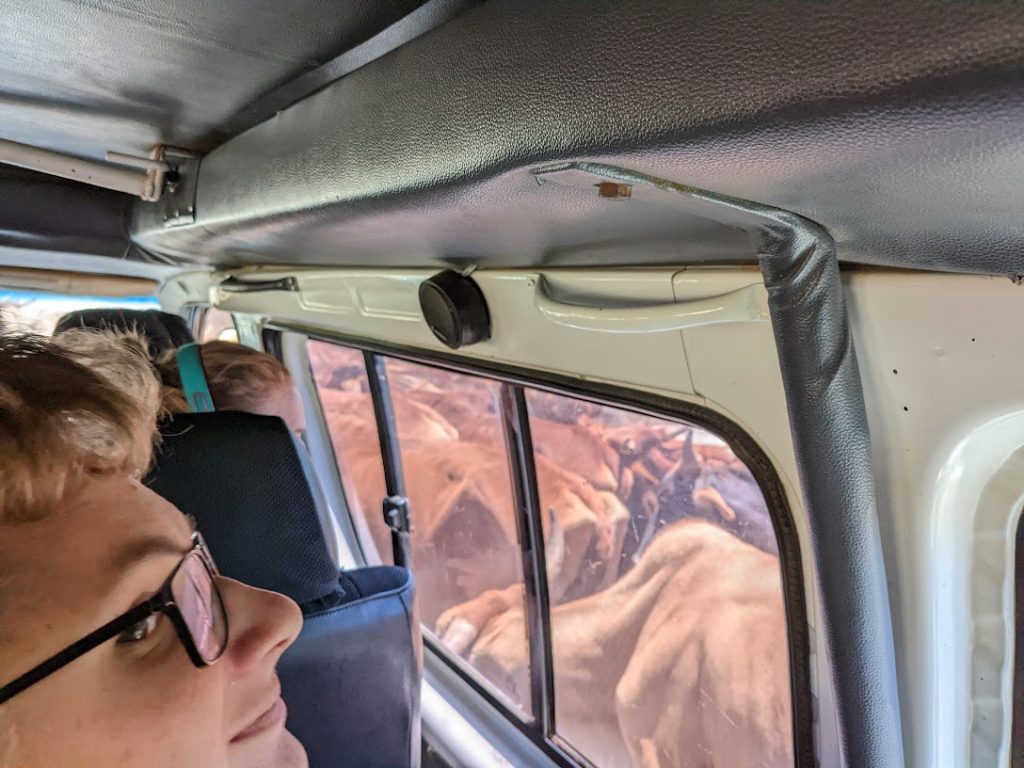
African traffic jam

We left the next morning (across the same bumpy roads) for a day that was mostly driving north so we could visit Lake Nakuru National Park the following day. However, we had a lovely couple of hours in the afternoon visiting Lake Naivasha, where we spotted some hippos and birds before stopping at Crescent Island, a private, walking only, little reserve where the boat dropped us then picked us up at the other end of the “crescent”.

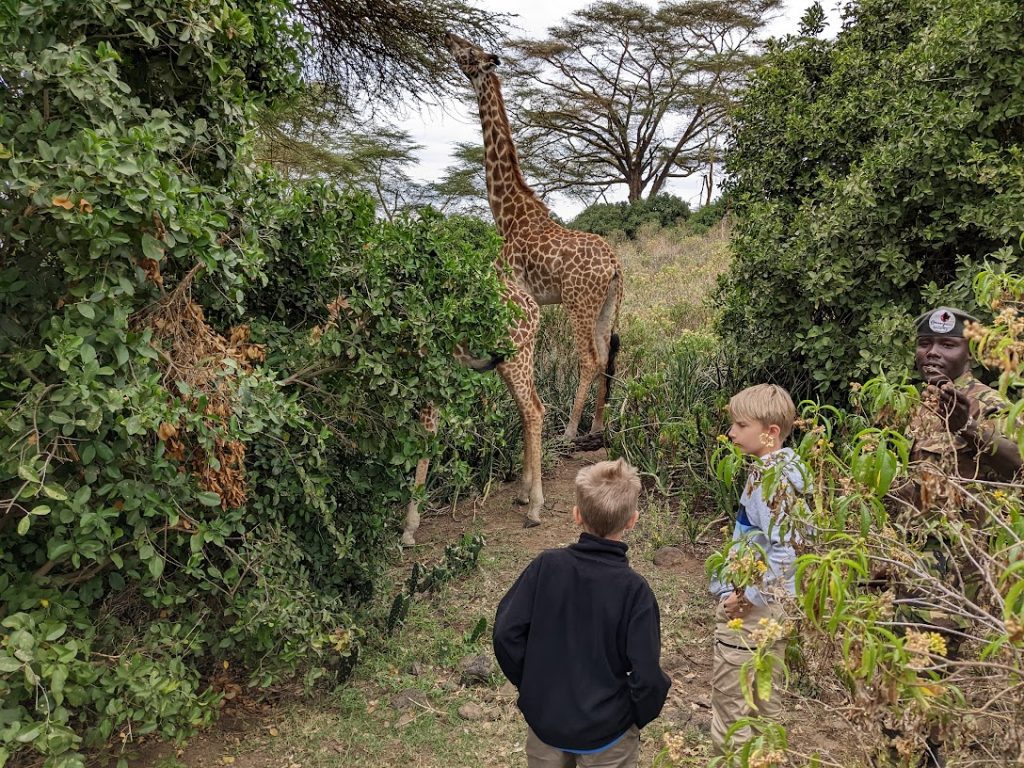
We were having a pleasant walk at the island, ambling along and not seeing too much when a guard came hustling over the hill towards us. I was worried we were doing something wrong until he said, “do you want to see giraffes?!”

No giraffe view
Now with giraffes. Helpful guard on the right!

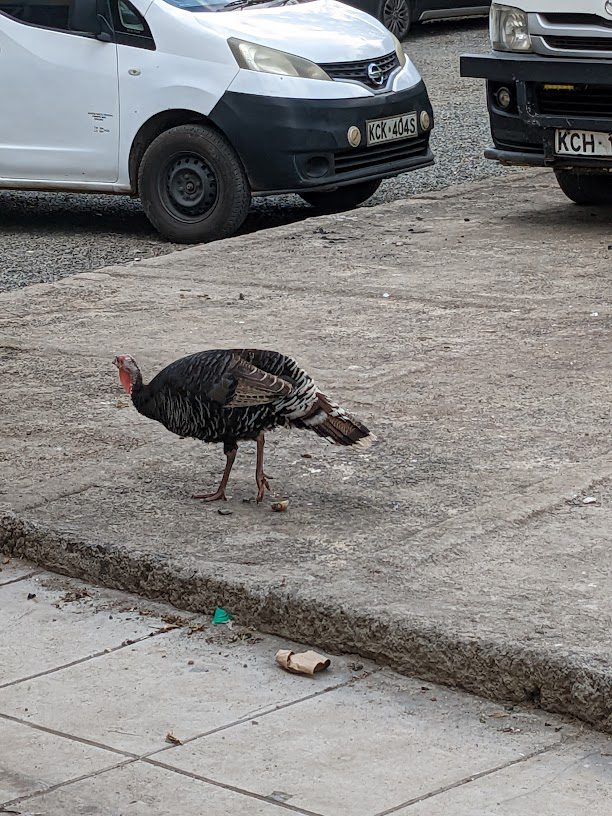
After the lake, we traveled a bit further to the Lanet Matfam Resort, which served our favorite food of the trip. It was well seasoned, but also was quite obviously fresh. Here’s a turkey that was wandering around the parking lot:

Taken less than an hour before we ate it.

One thing we liked about the Lanet Matfam as well as the Sweet Lake Resort, where we stayed the next night, was that they weren’t secluded resorts with only western tourists. In fact most of the other guests were Kenyans. I felt underdressed at Sweet Lake because there was some kind of business conference there that all the other guests seemed to be attending. I said at the top of the post that the tourist infrastructure wasn’t as developed as we were used to, but in Kenya at least, we learned that isn’t exactly true.

The day after the drive from Maasai Mara and visiting Crescent Island, we spent 5-6 hours at Lake Nakura park, which was notable for the large numbers of rhinos and the namesake lake stocked full of flamingos and other birds. You can see pictures in the second half of this Instagram post (which also includes Lake Naivashu and Crescent Island):

Hell’s Gate and Amboseli

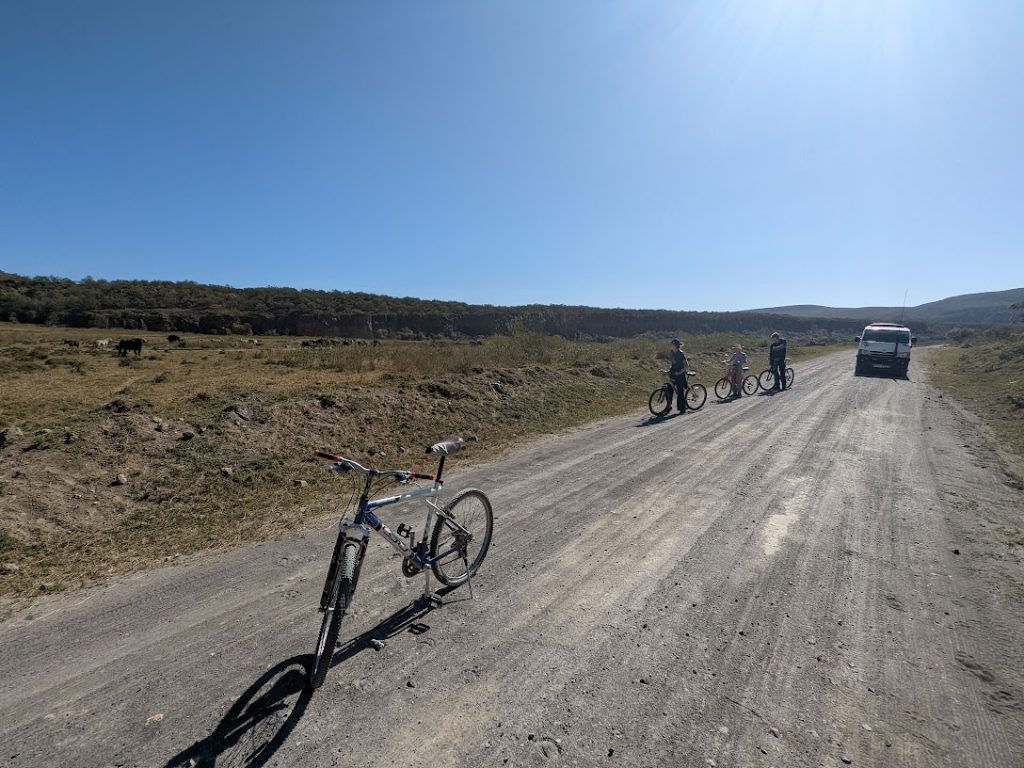
The following morning, we spent a couple hours riding bikes in Hell’s Gate National Park before a 6-7 hour drive to the South of Kenya for Amboseli National Park, in the shadow of Mt Kilimanjaro. This last day was the most expensive part of the trip, both because of the added park fees ($225) and our most expensive lodge, but we were excited to see one of the most famous mountains in the world, even though we were skipping Tanzania where it was actually located.

Hell’s Gate, right before we surprised three hyena eating a zebra. Thankfully, they ran off! (Picture includes my whole family if you count the fact that our James stayed in the 4×4 with driver James because he didn’t want to ride. The road was quite bumpy, so he was happy with his choice.)
From the Sentrim Amboseli, which was the only place we stayed that had only western tourists. Big buffet spreads, though.
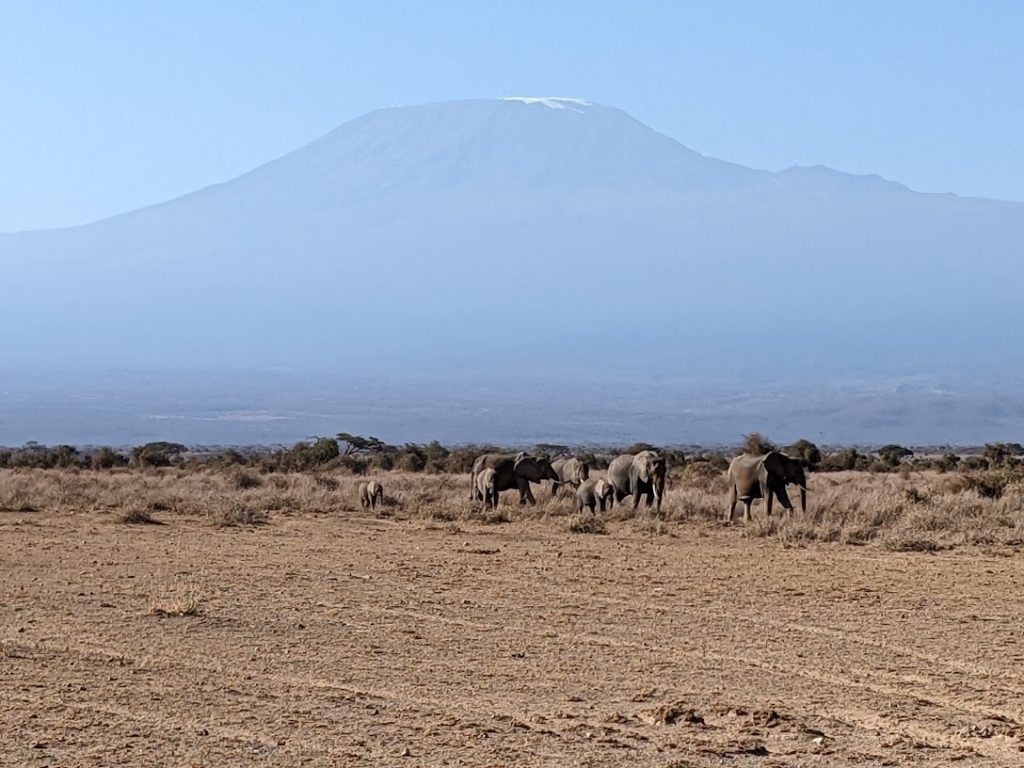
The famous mountain. Driver James tracked this elephant family for 30-minutes or so in order to get us the picture you see at the start of this next Instagram post:

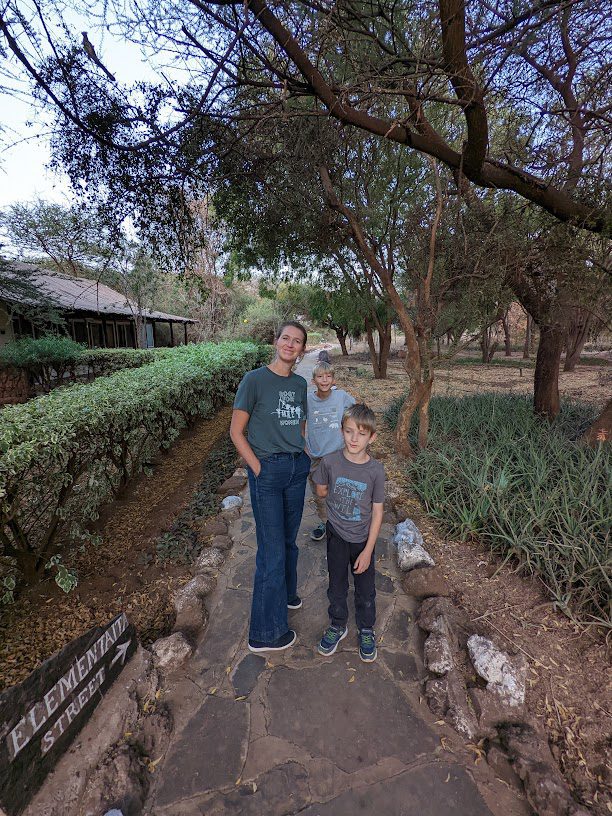
And that concludes our safari trip. After the whole morning at Amboseli National Park, James shuttled us back to Nairobi where we had another couple of nights relaxing at our Airbnb farmhouse before flying onwards to Uganda. On the day in-between, Karen, James, and I made a return trip to the Giraffe Centre for a little more giraffe feeding and also visited the excellent Karen Blixen Museum. We had a wonderful time in Kenya, and with the excellent introduction to the region were feeling confident about being a little more independent in Uganda and Rwanda.

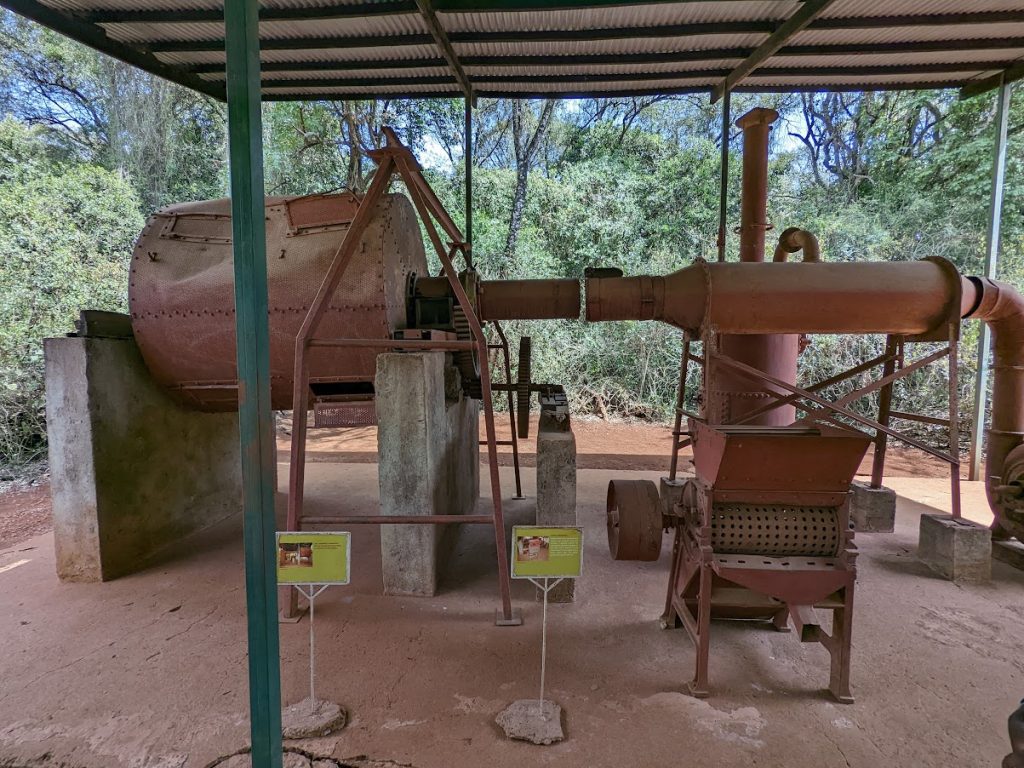
Coffee roasting machine at the Karen Blixen Museum. The neighborhood we stayed in Nairobi, “Karen”, got it’s name from this Danish transplant, who tried to run a farm after an unsuccessful marriage brought her to Kenya. You might know her as the author of her memoir “Out of Africa”, which became a Best Picture-winning film with Robert Redford and Meryl Streep.

Stay tuned for a next post about Uganda and Rwanda, which will hopefully come a lot faster than this one!

Country counter after Kenya:

  • 24th country of our trip
  • Me: 63 countries (including 37 eating McDonald’s)
  • Karen: 63 countries
  • Henry: 37 countries
  • Charlie: 33 countries
  • James: 30 countries (he’s kind of a fancy 8-year-old, averaging greater than 3 per year!)

Catchup Post: Italy, Tunisia, and Greece

9/5-10/3

One last short post to finish the European leg of our trep, covering our time in Italy, Tunisia (not in Europe!), and Greece. Again just linking to the Instagram posts I made for these countries, which were shared previously on Instagram or Facebook.

Italy, Part 1 (9/5-9/10)

Tunisia (9/11-9/17)

Italy, Part 2 (9/18-9/23)

Greece (9/24-10/3)

Country counter after these places:

21st, 22nd, and 23rd countries of our trip
Me: 62 countries (including 37 eating McDonald’s)
Karen: 62 countries
Henry: 36 countries
Charlie: 32 countries
James: 29 countries
Catchup post: Behind the former Iron Curtain

8/25-9/3

Another short post covering our time in Berlin, Poland, and the Czech Republic. Again just linking to the Instagram posts I made for these countries, which were shared previously on Instagram or Facebook.

Germany (8/25-8/28)

Poland (8/29-8/31)

Czech Republic (9/1-9/3)

Country counter after these places:

19th and 20th countries of our trip
Me: 60 countries (including 35 eating McDonald’s)
Karen: 60 countries
Henry: 33 countries
Charlie: 29 countries
James: 26 countries

Catchup post: Balkans and Bulgaria

8/11-8/24

Another short post covering our time in Croatia, Bosnia & Herzegovina, and Bulgaria. Again just linking to the Instagram posts I made for these countries, which were shared previously on Instagram or Facebook.

Croatia (8/11-8/12)

Bosnia & Herzegovina (8/13-8/16)

Bulgaria (8/17-8/24)

Country counter after these places:

  • 16th, 17th, and 18th countries of our trip
  • Me: 60 countries (including 35 eating McDonald’s)
  • Karen: 60 countries
  • Henry: 31 countries
  • Charlie: 27 countries
  • James: 24 countries